Analyzing Gaps in Patients’ Chronic Care Management
Exploring the end-to-end patient journey to uncover shared challenges and unmet needs in chronic care management
Organization
Ariadne Labs
My Role
UX Researcher
Project Manager
Team
3 UX Researchers
1 Project Manager
Duration
2 Months
UserTesting
Figma + FigJam
Miro
Tools
RESEARCH GOAL
Understand how patients experience chronic care from diagnosis through ongoing management, identify where care breaks down, and uncover shared needs across different patient journeys.
OUTCOME
Identified the shared challenges across patient journeys and translated them into research artifacts and opportunity areas to support Ariadne Labs’ exploration of future solutions.
Method
Semi-Structured Interviews • Affinity
Mapping • Personas • Journey Mapping
CHALLENGE
Ariadne Labs needed to understand the challenges patients face throughout chronic care management before exploring solutions that could address needs across different conditions and care experiences.
DEFINING THE SCOPE
We narrowed a complex problem space to create depth without losing sight of the larger system.
Ariadne Labs wanted to understand the patient perspective on long-term chronic care management (CCM), a broad problem spanning different conditions, care experiences, and patient needs.
To make the research actionable within the project scope, we focused our primary research on cardiovascular disease (CVD). This decision allowed us to investigate one high-prevalence condition in greater depth while remaining attentive to patterns that could inform broader questions about chronic care management.
We created space for patients to tell their stories while maintaining enough structure to compare experiences.
RESEARCH DESIGN
We conducted 10 moderated, semi-structured interviews to explore patients’ experiences from diagnosis through ongoing condition management. The flexible interview structure allowed us to follow unexpected but relevant threads within each patient’s story, while a shared discussion guide kept the team aligned around the research goals.
This balance was especially important when discussing personal and emotionally sensitive healthcare experiences, where rigid questioning could limit what participants chose to share.
We looked across individual patient stories to identify shared patterns without losing the context behind them.
DATA SYNTHESIS
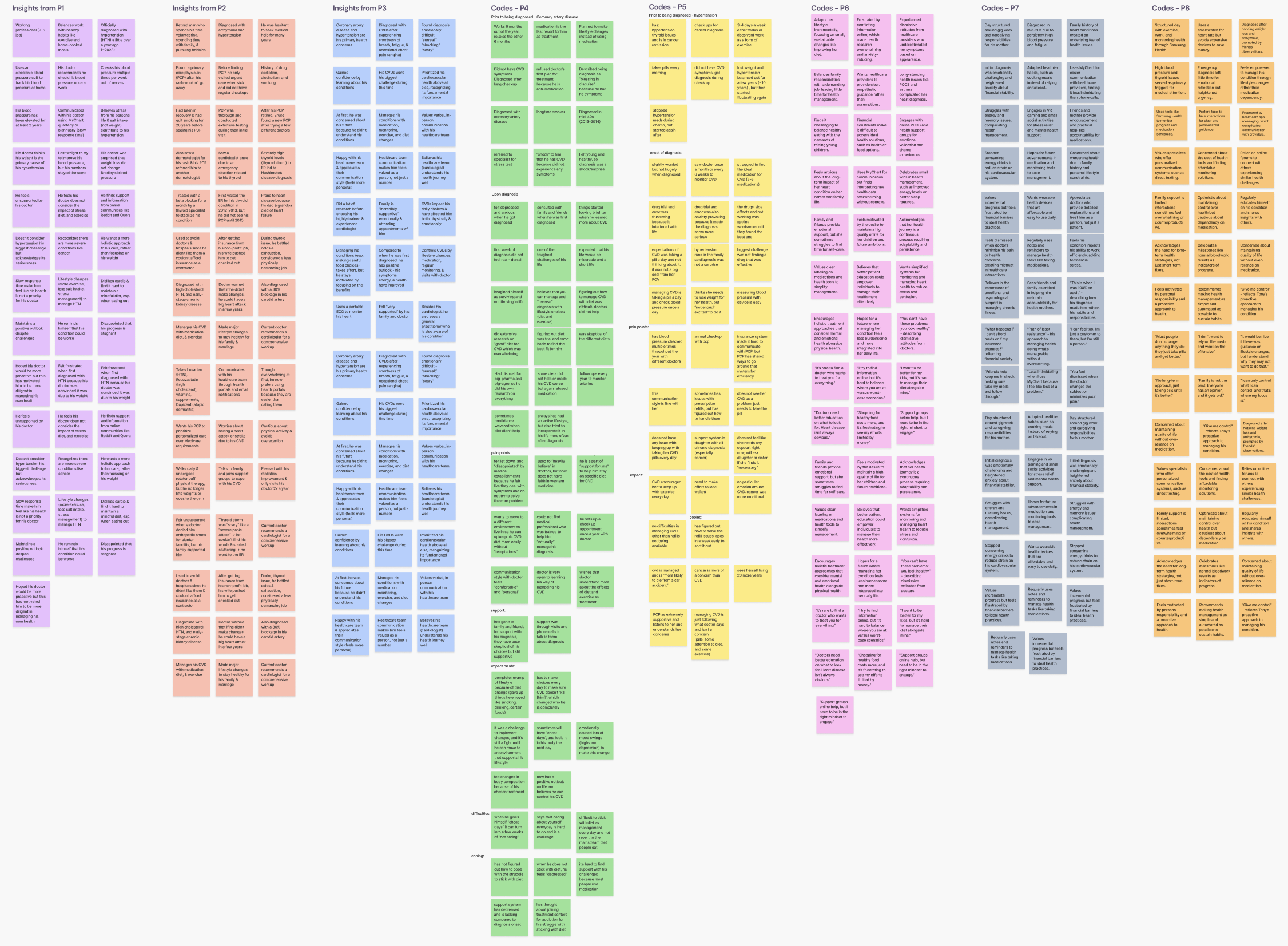
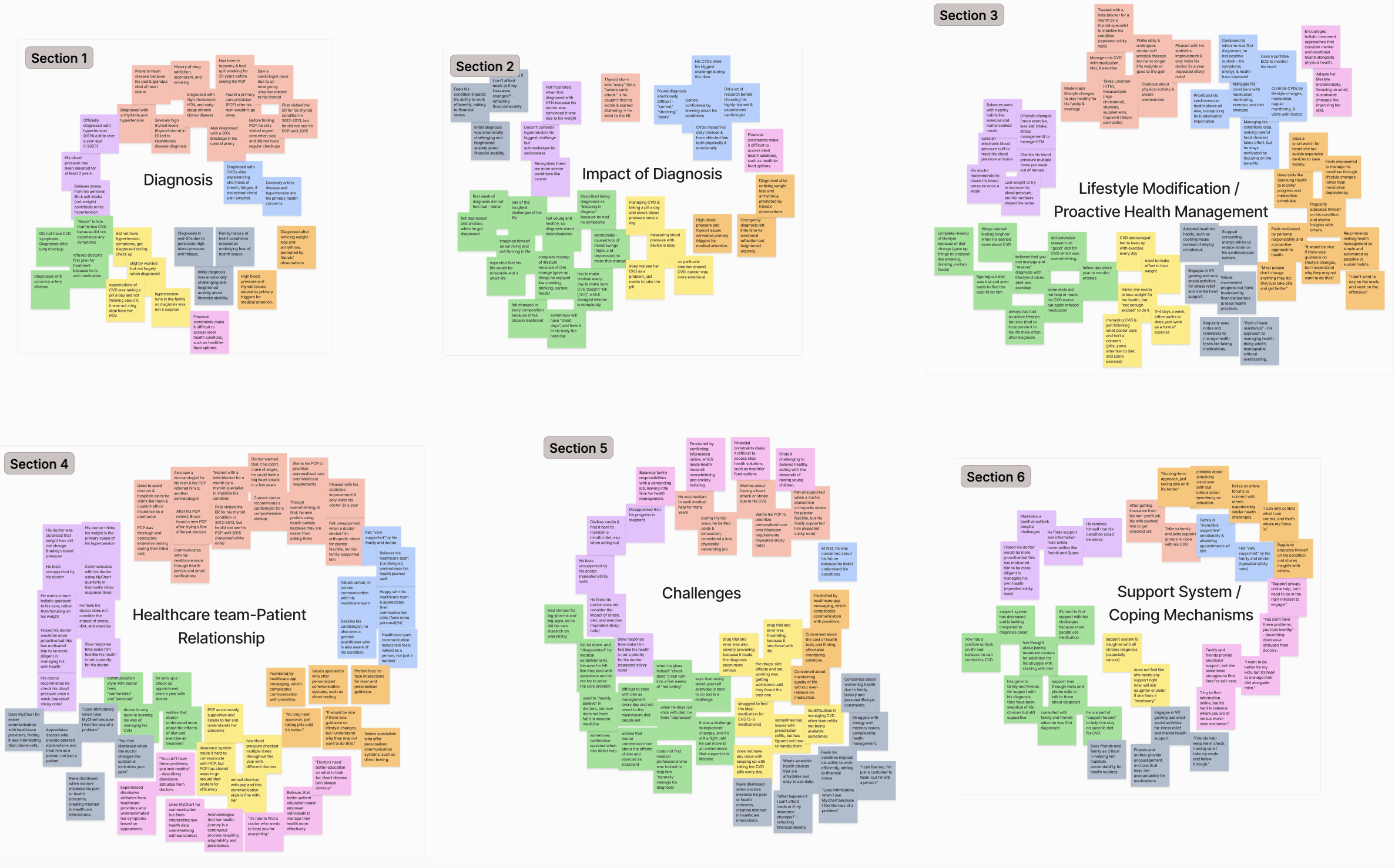
After coding the interview transcripts, we used affinity mapping to compare experiences across participants and identify recurring connections between behaviors, emotions, and unmet needs.
Through collaborative discussions and iterations, we moved from individual observations to broader themes that captured challenges across the patient experience.
MODELING THE PATIENT EXPERIENCE
We transformed recurring patterns into models that made a nuanced and complex experience easier to understand.
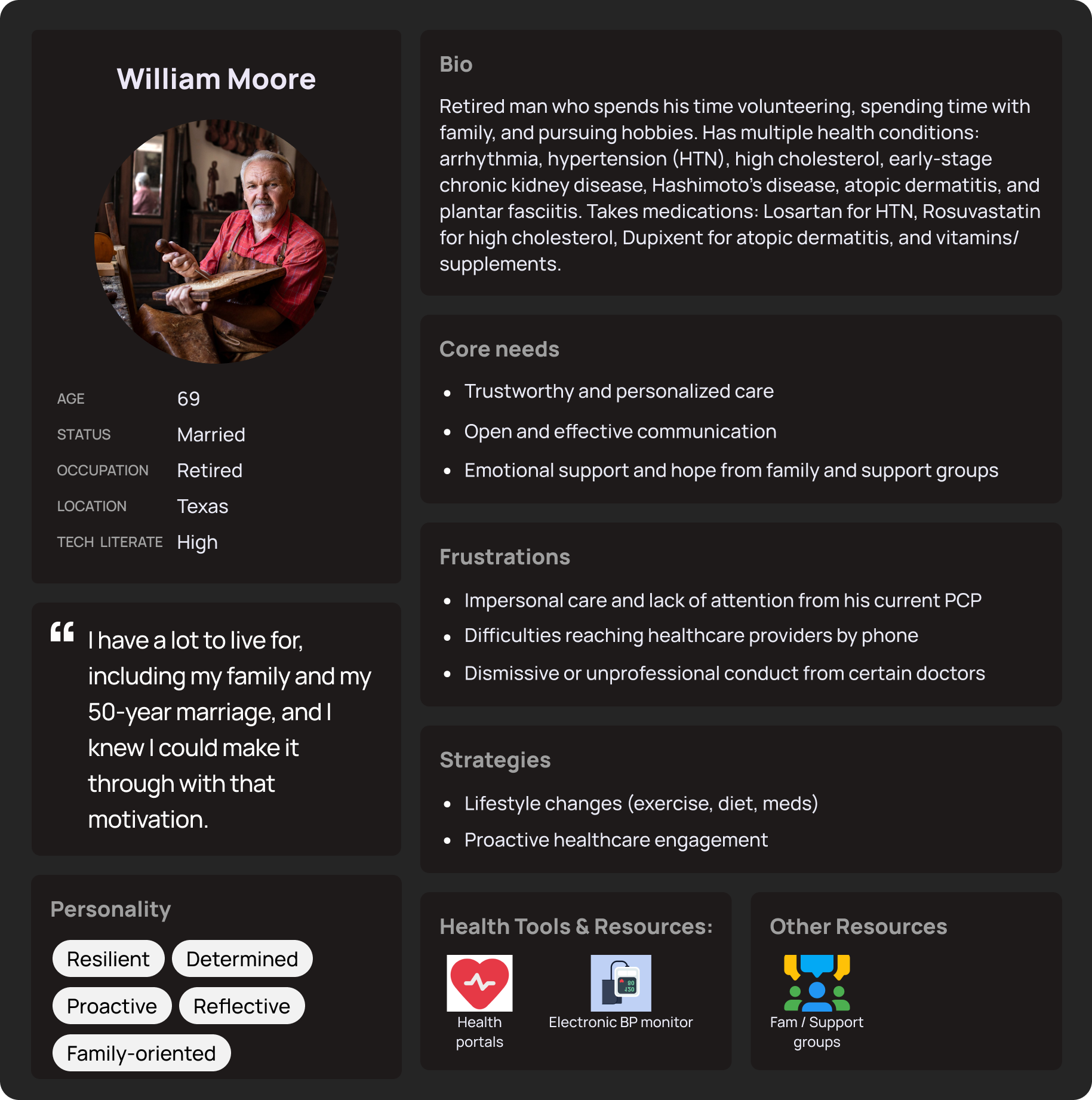
Our analysis revealed meaningful differences in how patients approached, experienced, and adapted to chronic condition management. After team discussion and iteration, we developed three personas to represent recurring patterns in attitudes, behaviors, and needs across our research.
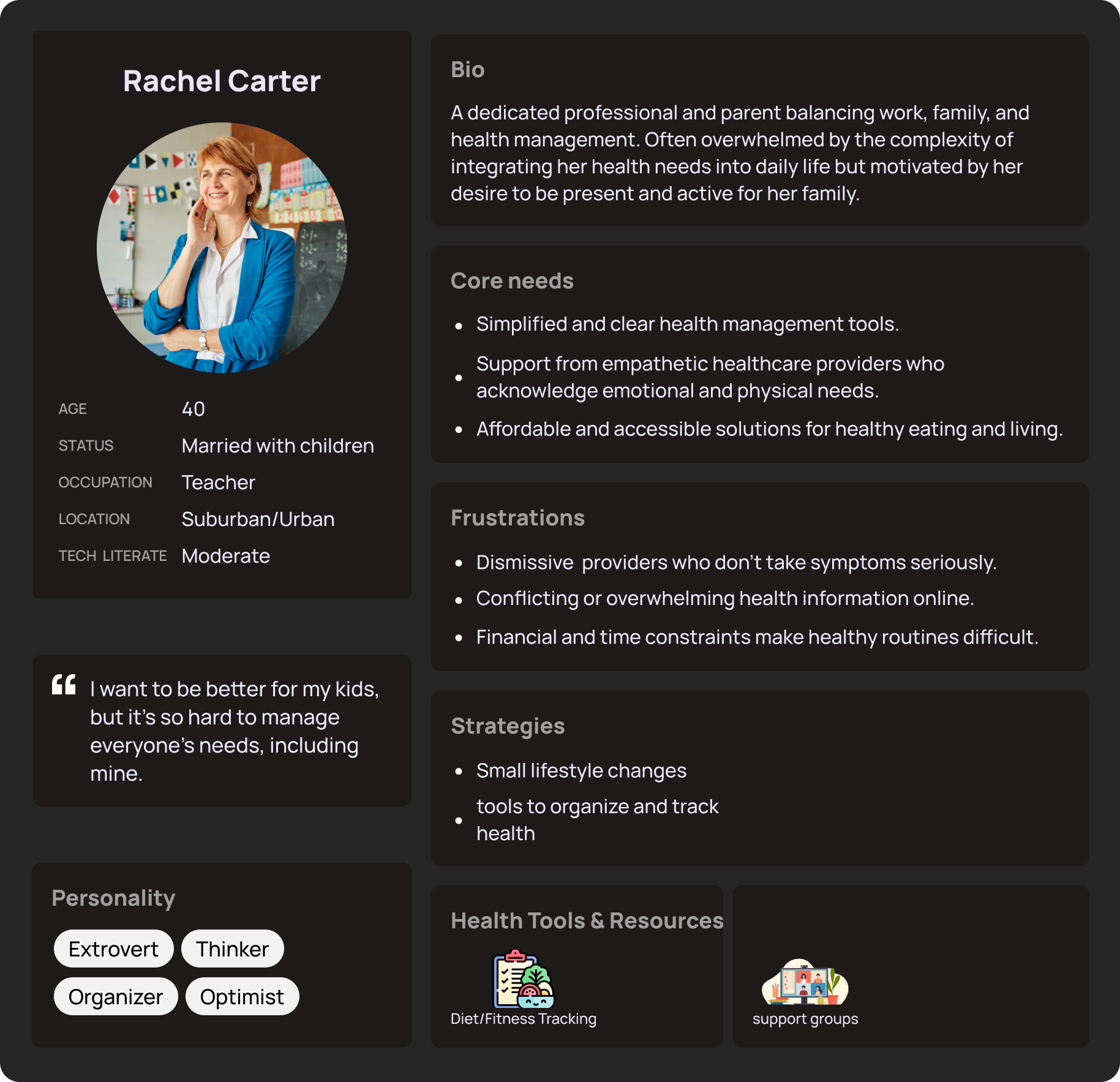
The Determined Multitasker
The Skeptic Reformer
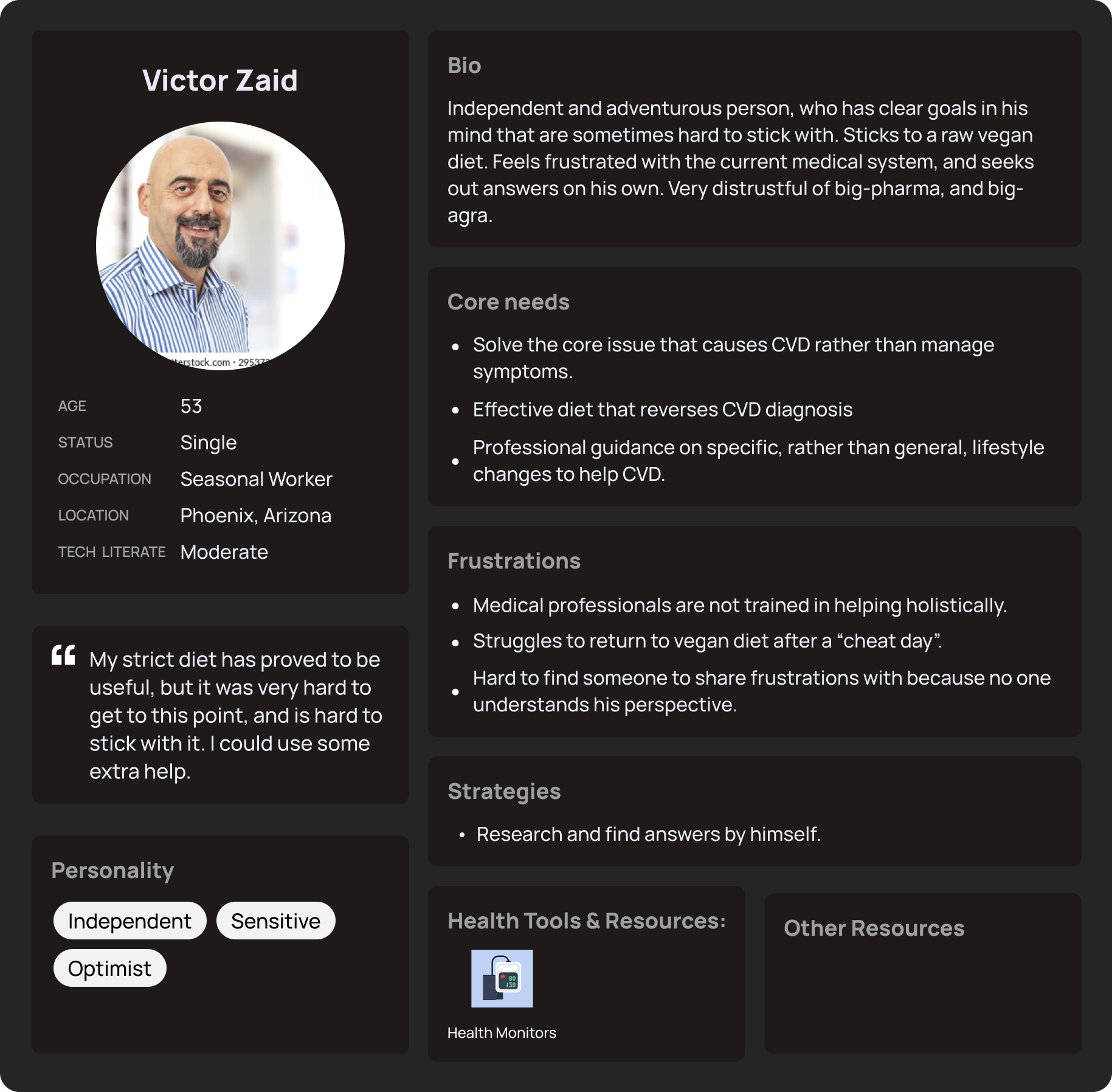
The Resilient Retiree
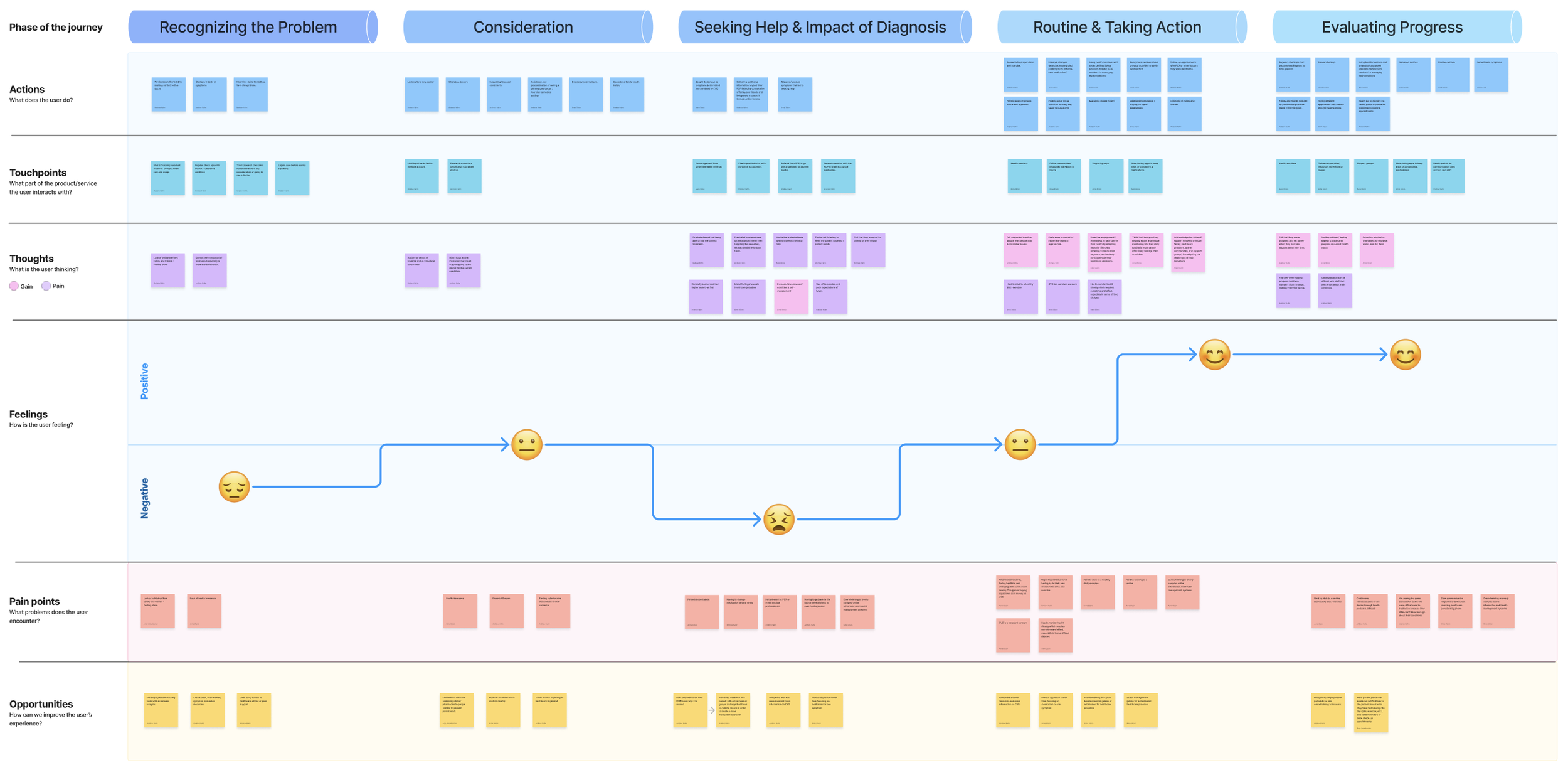
Mapping the experience across five stages helped us understand how patient needs, emotions, and barriers evolved over time, revealing opportunities that were hidden in the raw data.
These artifacts together allowed us top move beyond isolated pain points, and examine where challenges emerged across the entirety of the care journey.
KEY INSIGHTS
Patients lacked guidance beyond clinical treatment.
Patients consistently described receiving information about medications and immediate treatment, but far less guidance on sustaining lifestyle changes after diagnosis. Many turned to online resources to fill these gaps, leaving them overwhelmed and unsure which information they could trust.
Why this matters: Without accessible, trustworthy guidance, patients were left to navigate long-term condition management largely on their own.
Sustaining healthy behaviors proved more difficult than starting them.
Patients understood the importance of diet, exercise, and medication, yet maintaining those behaviors became increasingly challenging without ongoing accountability and support. Motivation often declined over time as patients managed their condition independently.
Why this matters: Long-term condition management depends not only on educating patients, but also supporting behavior change beyond the clinical setting.

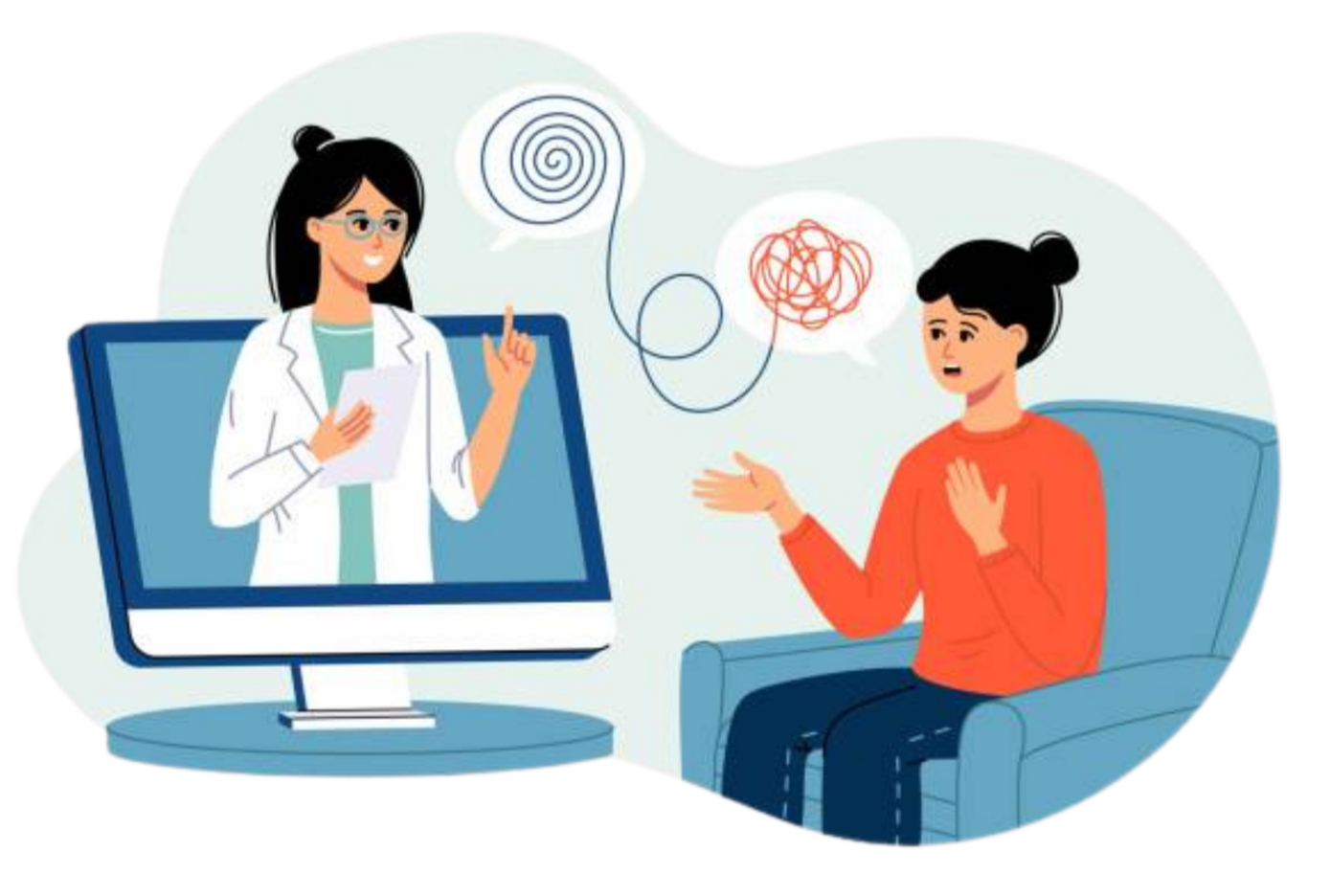
Patients wanted to feel heard, not just treated.
Many participants described interactions where they felt dismissed or unheard by healthcare providers, making it harder to trust recommendations or openly discuss concerns. These experiences affected not only emotional well-being, but also how confidently patients engaged in their own care.
Why this matters: Strong patient-provider relationships are essential to both clinical outcomes and patients' willingness to participate in long-term care.

As a team, we aligned on the findings that represented the strongest opportunities for intervention and reframed them as How Might We questions. We then used structured ideation to generate possibilities individually before coming together to compare, combine, and refine overlapping ideas.
This process helped us move from research evidence to opportunity areas while keeping proposed directions grounded in the patients’ lived experiences.
We moved from understanding the system to identifying where intervention could have the greatest value.
FROM INSIGHTS TO OPPORTUNITIES
How Might We close the information gap and better support long-term condition management?
Provide trusted educational resources beyond the clinical visit
Develop patient information packets that address common questions, lifestyle changes, and evidence-based resources, helping patients feel more prepared to manage their condition after diagnosis.

Strengthen accountability through community support
Create virtual and in-person support groups where patients can build accountability, share experiences, and continue learning through educational sessions and peer encouragement.
How Might We help patients sustain healthy behaviors over time?

Better understand and support provider communication
Conduct research with healthcare providers to understand barriers from the clinical perspective, then use those insights to inform communication training and improve the patient-provider experience.
How Might We strengthen trust between patients and healthcare providers

REFLECTIONS
Researching vulnerable populations requires balancing empathy with objectivity
Conducting interviews about chronic illness reinforced the importance of creating a space where participants felt comfortable sharing deeply personal experiences without allowing empathy to influence the interpretation of their stories.
In future studies, I would also prepare relevant support resources beforehand to responsibly assist participants if conversations surfaced emotional distress.
Strong insights emerge through collaborative sense-making
Some of the most meaningful connections between participants' experiences emerged through discussion with my teammates rather than individual analysis alone. This reinforced the value of challenging interpretations, building on one another's perspectives, and using collaborative synthesis to strengthen the quality of research findings.